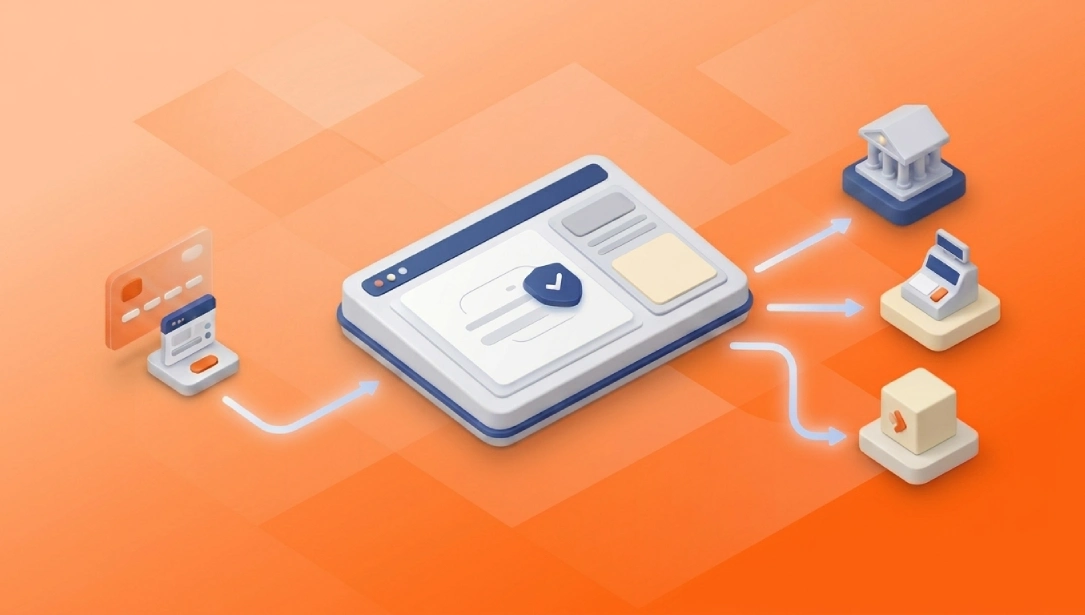
DBS, or Direct Debiting System, is a B2B cash management structure used in the Turkish banking market to help principal companies collect deferred receivables from dealers, distributors, or customers through bank-defined limits. Unlike a standard direct debit arrangement, DBS is not limited to debiting an account on the due date. When dealer limits, open invoices, ERP records, shipment approvals, and collection statuses are managed together, DBS becomes a financial operations layer that makes B2B collection risk more visible, controlled, and manageable.
What Is a Direct Debiting System and Why Does It Matter in B2B Trade?
In B2B trade, sales and collections rarely happen at the same time. A manufacturer, distributor, or principal company usually ships products first. The dealer or customer completes the payment on the agreed due date.
This time gap creates receivables risk for the principal company. The risk is not only delayed cash inflow. The real risk comes from managing limits, invoices, shipments, and collection statuses across disconnected systems.
A Direct Debiting System addresses this operational gap. The bank defines a DBS limit for the dealer or customer. The principal company then manages invoices or collection instructions through this limit structure.
On the due date, the bank initiates the collection flow. If the dealer has sufficient account balance, the payment can be completed. If the balance is insufficient, the credit-backed DBS limit defined by the bank may be activated.
This structure provides more control than checks, promissory notes, or open account tracking. Still, DBS does not eliminate every risk. It requires the right limit structure, contractual framework, approval rules, and integration model.
The real value of DBS starts before the collection date. Financial control becomes stronger when orders, invoices, dealer limits, and shipment decisions are managed within the same operating framework.
How Does DBS Work? The Flow Between the Principal Company, Dealer, and Bank
DBS operates between three core parties: the principal company, the dealer, and the bank. The flow may look simple, but operational details determine the quality of control.
1. The Bank Defines a DBS Limit for the Dealer
The bank defines a specific DBS limit for the dealer or customer. This limit depends on the dealer’s financial standing, payment behavior, creditworthiness, and the bank’s risk assessment.
This limit does not mean unlimited guarantee. Not every sale, dealer, or maturity carries the same level of risk. Finance teams must monitor available limits, open risk, overdue balances, and order volume regularly.
2. The Principal Company Creates the Invoice or Collection Instruction
The principal company enters the sales information, invoice amount, maturity date, and dealer details into the relevant system. Dealer code, customer account information, invoice number, and due date are critical data fields.
Manual entry increases operational risk at this point. An incorrect dealer code, wrong invoice amount, or missing maturity date can disrupt the collection flow and create reconciliation issues.
3. The Bank Attempts Collection on the Due Date
On the due date, the bank attempts to collect the payment from the dealer’s account. If there is sufficient balance, the collection can be completed.
If the account balance is insufficient, the credit-backed DBS limit may be activated. This mechanism depends on the bank agreement, limit structure, and product conditions.
4. The Collection Status Returns to the Principal Company
The collection result may be marked as successful, pending, partial, or failed. This status must flow accurately into the ERP system and the relevant customer ledger account.
If status information returns late, finance teams must perform manual checks. This extends reconciliation cycles, weakens decision quality, and increases operational workload.
Where Does Manual DBS Management Create Risk?
Using DBS alone is not enough. In companies with large dealer networks, manual DBS tracking quickly becomes unsustainable.
Finance teams check limits through bank portals. Sales teams create orders in another system. Warehouse teams prepare shipments in a separate operational flow.
This fragmentation makes risk visible too late. Insufficient limits may be noticed after shipment. Overdue invoices may not be considered at the time of order approval.
The most critical risks in manual DBS management include:
Process Area | Symptom in Manual Management | Potential Risk |
Dealer limit control | Limits are checked through separate bank portals | Risky orders may proceed |
Invoice upload | Invoices are entered manually into bank portals | Wrong amount or dealer code may be used |
Collection instruction | Instructions are tracked manually | Instructions may be delayed or incomplete |
Due-date tracking | Collection status is queried manually | Finance teams may see the result too late |
Shipment approval | Warehouse teams cannot see financial status | Limit breaches may be detected after shipment |
The value of DBS is not created only on the collection date. Its real value comes from making risk visible before order approval and shipment execution.
How Do Online DBS and Open Banking Change the Process?
Online DBS can reduce the need to log in to multiple bank portals one by one. Finance teams can monitor invoices, instructions, limits, and collection statuses more centrally.
Open banking and API connections can strengthen this visibility. Account data, payment status, and financial data flows can be monitored through more standardized structures.
However, an API connection alone is not a financial solution. Response times, timeouts, rate limits, data formats, and exception handling all affect process quality.
The real value is not simply receiving data from the bank. Value is created when the data is connected to the right business rules.
ERP, customer ledger accounts, invoices, approvals, and risk management must work within the same operational flow.
Therefore, an online DBS approach must answer a more strategic question:
How does this data influence finance, sales, and logistics decisions earlier?
If the answer is only “we retrieve data from the bank,” the structure remains incomplete. If the answer is “we manage limits, invoices, orders, and shipment decisions together,” the structure becomes operationally mature.
Why Are ERP, B2B Platform, and WMS Integrations Critical for DBS?
In modern B2B trade, orders, invoices, inventory, shipments, and collections cannot be evaluated separately. Each one represents a different stage of the same commercial risk.
ERP integration connects invoice data, customer ledger accounts, and collection statuses to the DBS flow. B2B platform integration links dealer orders with limit checks and approval rules.
WMS or warehouse management integration adds a financial control layer to shipment decisions. This allows warehouse teams to act not only based on stock availability, but also based on financial approval status.
This structure is not ready by default in every company. It requires clean master data, accurate dealer codes, structured customer accounts, and clear approval rules.
How Can Limit Control Work at the Order Stage?
The dealer creates an order through the B2B platform. The system compares open risk, available DBS limit, overdue invoices, and the value of the new order.
If the limit is sufficient, the order can proceed through the standard flow. If the limit is insufficient, the system can move the order to an approval queue.
In this case, the finance team evaluates three options. It may hold the order, request a limit update, or suggest an alternative payment method.
This approach does not blindly stop sales. It creates a controlled balance between commercial growth and financial risk.
Why Is Pre-Shipment Financial Control Important?
Identifying a risky order after shipment is delayed control. Financial decisions must be clear before the order reaches the warehouse gate.
Pre-shipment financial control brings finance and logistics teams into the same status view. Teams work with the same dealer, invoice, limit, and collection information.
This structure is not designed to slow down sales. Its purpose is to detect risky flows early and route them to the right approval mechanism.
How Can DBS Limit Management Reduce B2B Collection Risk?
DBS limits should not be treated as static figures. A DBS limit is a financial indicator that helps interpret dealer behavior and open risk.
Finance teams should not look only at available limit. Open invoices, overdue debt, order volume, payment history, and seasonal sales patterns must be evaluated together.
Risk management does not start when a collection fails. It starts before the order is approved, before the shipment is released, and before the invoice reaches maturity.
Pre-order control, pre-shipment control, and due-date collection tracking must work as one connected process.
How Can Low-, Medium-, and High-Risk Dealer Segmentation Be Used?
Dealer segmentation makes DBS limit management easier to read. However, segmentation alone is not a credit decision.
A low-risk dealer shows consistent payment behavior. Limit utilization remains balanced, and overdue debt tendency is limited.
A medium-risk dealer may experience periodic fluctuations. In this group, order amount, limit utilization, overdue history, and collection frequency must be monitored more closely.
A high-risk dealer may show signs of payment delay, dispute, or limit breach. For these dealers, approval queues and alternative payment flows become more important.
Finance and risk teams must define these segments according to their own policies. Automation helps apply the defined rules more consistently and visibly.
How Do Partial Collections and Hybrid Payment Models Support DBS?
A dealer’s DBS limit may not cover every order or invoice amount. In such cases, rejecting the entire order may create commercial loss.
A partial collection approach offers a more flexible alternative. The portion covered by the DBS limit can proceed through DBS. The remaining amount can be completed through another payment method.
Virtual POS, payment links, wire transfer, EFT, or credit card payments can play a complementary role here. This model provides commercial flexibility, especially for high-value orders.
However, hybrid payment models require clear rules. ERP, customer ledger accounts, and accounting records must process partial flows correctly. Otherwise, collection becomes visible, but reconciliation becomes difficult.
Hybrid payment structures help create balance when the DBS limit is not sufficient. Yet this balance depends on clear approvals, accurate records, and transparent status management.
What Is the Difference Between DBS, Trade Credit Insurance, and Letters of Guarantee?
DBS, trade credit insurance, and letters of guarantee address related needs. However, they do not work with the same logic.
DBS operates through due-date collection and bank-defined dealer limits. Trade credit insurance addresses receivables risk under specific conditions through an insurance mechanism.
Letters of guarantee or surety insurance provide different collateral mechanisms. These instruments are not exact substitutes for one another.
Companies should design a combination based on dealer profile, sector risk, transaction volume, and cost structure. Trying to manage all risks through a single instrument is a weak approach.
Criteria | DBS | Trade Credit Insurance | Letter of Guarantee / Surety Insurance |
Primary purpose | Strengthen due-date collection discipline | Cover receivables risk under specific policy conditions | Provide collateral for debt or contractual obligations |
Scope | Dealer, invoice, due date, and bank-defined limit | Buyers and receivables covered under the policy | Contract-based collateral relationship |
Cost structure | Depends on bank and limit conditions | Depends on premium, limit, and risk assessment | Depends on commission and collateral terms |
Operational speed | Becomes more traceable with integration | Requires policy and claims processes | Requires documentation and bank processes |
Suitable use | Dealer networks and deferred collections | Portfolio-based receivables risk | High-value collateral requirements |
Limitation | Depends on limit and bank conditions | Policy exclusions may apply | May create operational documentation load |
Impact on finance teams | Makes collection tracking more structured | Adds an additional risk assessment layer | Introduces collateral tracking requirements |
The Business Impact of DBS Automation
DBS automation does more than reduce the number of bank portals and spreadsheets used by finance teams. When designed correctly, it connects sales, finance, accounting, and logistics decisions.
Process Area | Symptom in Manual Management | Risk | Area Strengthened by Automation | Point to Consider |
Dealer limit control | Limits are queried manually | Risk is detected late | Limit visibility increases | Limit rules must be clearly defined |
Invoice upload | Data is entered into bank portals | Incorrect data may occur | Invoice flow becomes more structured | Data fields must be matched accurately |
Collection instruction | Instructions remain in tracking lists | Due-date flow may fail | Instruction management becomes centralized | Bank conditions must be considered |
Due-date status | Status is monitored manually | Customer accounts are updated late | Collection status tracking improves | Rules are needed for failed statuses |
Pre-shipment control | Warehouse does not see financial status | Risky shipments may occur | Approval queues are activated | Commercial exceptions must be defined |
Partial collection | Tracking moves into Excel | Reconciliation becomes difficult | Hybrid payments become traceable | Accounting records must be structured correctly |
Alternative payment | Sales team redirects manually | Delays may occur | Payment options accelerate | Authority and approval limits are required |
Risky dealer tracking | Delays are seen afterward | Limit breaches may grow | Segmentation becomes visible | Credit decisions still require human control |
Managing DBS and B2B Collection Processes More Visibly with Finrota
Finrota provides B2B financial operations solutions that help businesses manage bank transactions, DBS, collections, POS data, bulk payments, and cash flow processes with greater visibility.
This approach does not treat DBS in isolation. It evaluates DBS within the same framework as invoices, banks, ERP systems, collections, payments, and cash flow data.
Finrota E-DBS: Managing Invoice, Dealer Limit, and Collection Flows Centrally
Finrota E-DBS helps companies monitor DBS processes across different banks from a single panel. It supports bank-based online invoice uploads, dealer limit control, balance checks, and collection status tracking.
ERP integration supports the structured processing of invoice and collection data into customer ledger accounts. This increases visibility, especially for companies using DBS across multiple banks.
Finrota E-DBS does not eliminate risk on its own. However, it makes limit, invoice, and collection status data more centrally manageable.
Netahsilat: Supporting Collection Scenarios Outside DBS
DBS may not be sufficient for every dealer and every transaction. Alternative collection methods are needed when the limit is insufficient.
Netahsilat supports payment links, dealer collections, and online collection processes. This makes hybrid payment or partial collection scenarios easier to monitor.
This approach can prevent sales from stopping completely. However, finance teams must define rules, limits, and approval processes correctly.
TÖS: Status and Approval Control in Bulk Payment Processes
Financial operations are not limited to collections. Supplier payments, bulk transfers, and approval flows require the same level of visibility.
TÖS helps manage EFT, wire transfer, SWIFT, and bulk money transfers across multiple banks. Approval flows and status visibility strengthen financial control.
Companies that monitor both collections and payments can read their cash position more accurately.
Netekstre and Posrapor: Connecting Bank and POS Data to Financial Visibility
Financial movements outside DBS also affect cash flow. Bank account transactions, POS commissions, installments, value dates, and blocked settlement dates are critical signals for finance teams.
Netekstre helps monitor account transactions from different banks in a single panel. Posrapor supports visibility into POS commissions, installments, value dates, and net collections.
These two layers make non-DBS cash movements easier to read and reconcile.
NAP360: Bringing Receivables and Payables into a Cash Flow Perspective
DBS and collection data do not only show past transactions. When interpreted correctly, they also generate signals for future cash positions.
NAP360 helps monitor receivables and payables from a cash flow perspective. Its scenario and forecasting approach gives finance teams the opportunity to assess risks earlier.
For this reason, DBS automation is only one part of cash flow management. The real value emerges when all financial movements are combined within a shared decision layer.
Frequently Asked Questions
What is DBS?
DBS stands for Direct Debiting System in this context. It is a B2B cash management structure used in the Turkish banking market to help principal companies collect deferred receivables from dealers, distributors, or customers through bank-defined limits.
Is DBS the same as a standard direct debit?
No. A standard direct debit usually refers to debiting an account based on a payment mandate. DBS is broader in the Turkish B2B banking context. It includes dealer limits, invoice-based collection, maturity tracking, bank-defined credit capacity, and collection status management.
How does DBS work?
In DBS, the bank defines a specific limit for the dealer. The principal company creates the invoice or collection instruction. On the due date, the bank initiates the collection flow. The result returns to the principal company as successful, pending, partial, or failed.
What is DBS automation?
DBS automation is a digital workflow that manages invoice uploads, collection instructions, dealer limit checks, collection statuses, and ERP records more centrally. Its purpose is to reduce manual tracking and make financial risk visible earlier.
What is the difference between online DBS and manual DBS?
In manual DBS, finance teams work across bank portals, spreadsheets, and ERP records. Online DBS helps monitor invoices, instructions, limits, balances, and collection statuses more centrally. This structure increases operational visibility.
What does DBS do in dealer collections?
DBS strengthens due-date payment discipline in dealer collections. Dealer limits, invoice maturities, and collection statuses can be tracked more regularly. This gives finance teams more controlled tracking capabilities, especially in large dealer networks.
Why is DBS limit management important?
A DBS limit is not only a number defined by the bank. It must be interpreted together with the dealer’s open invoices, overdue debt, order volume, and payment behavior. Proper limit management helps evaluate risky orders before shipment.
Why is ERP integration critical in DBS processes?
ERP integration connects invoice, customer ledger account, and collection data to the DBS flow. Without integration, finance teams process collection statuses manually. This extends reconciliation cycles and increases operational error risk.
How does open banking support DBS management?
Open banking and API connections support the monitoring of financial data through more standardized flows. However, an API alone is not enough. The real value is created when data is connected with ERP, invoices, customer accounts, approvals, and risk management.
What happens if the DBS limit is insufficient?
The DBS limit may not cover the full order or invoice amount. In this case, the company may move the order to an approval queue, request an alternative payment, or activate a partial collection setup. The decision should be based on the company’s risk policies.
What is partial collection?
Partial collection means completing an order or invoice amount through more than one payment method. The portion covered by the DBS limit may proceed through DBS. The remaining amount can be collected through virtual POS, payment link, wire transfer, or EFT.
What is the difference between DBS and trade credit insurance?
DBS works through a bank-defined limit and due-date collection structure. Trade credit insurance addresses receivables risk under specific policy conditions. These two instruments operate differently and may be evaluated together.
Is DBS suitable for every company?
DBS is especially meaningful for companies with dealer networks, deferred sales, and regular invoice collections. However, it is not the only solution for every dealer, sector, or sales model. Companies should evaluate payment methods together based on their risk profile.
Which processes does Finrota E-DBS support?
Finrota E-DBS helps manage DBS processes across different banks from a single panel. It makes invoice upload, dealer limit and balance control, collection status tracking, and ERP integration more visible.
Final Assessment
Managing collection risk in B2B trade requires more than making deferred sales. Creating a bank instruction alone does not provide strong financial control.
Dealer limits, invoices, customer accounts, ERP records, shipment approvals, and collection statuses must be managed together. With the right integration and automation approach, DBS can make this process more visible and controllable.
A strong structure does not manage risk through exaggerated promises. It manages risk through accurate data. This enables finance teams to make earlier, clearer, and more consistent decisions.
To make dealer collections, DBS limit management, and financial operations more visible, you can explore Finrota solutions and request a demo to evaluate the right digitalization options for your business.