Accepting payments through digital sales channels is not limited to a customer entering card details and receiving an approval message. As a business grows, concepts such as payment gateway, virtual POS, multi-POS management, installment options, transaction status, voids, refunds and payment routing become part of the same operational flow. For this reason, the key question is not only “Can we accept card payments?” but also “How visible, controlled and manageable is our payment flow?”
For e-commerce websites and digital sales channels, payment infrastructure directly affects customer experience, financial tracking and operational efficiency. A single virtual POS setup may be sufficient at the beginning. However, when a business starts working with multiple banks or payment providers, needs bank-based installment rules, card-based conditions, smart routing and centralized transaction monitoring, a more comprehensive structure becomes necessary. In this article, we explain what a payment gateway is, how it differs from a virtual POS, and how it works with multi-POS management and smart routing.
What Is a Payment Gateway?
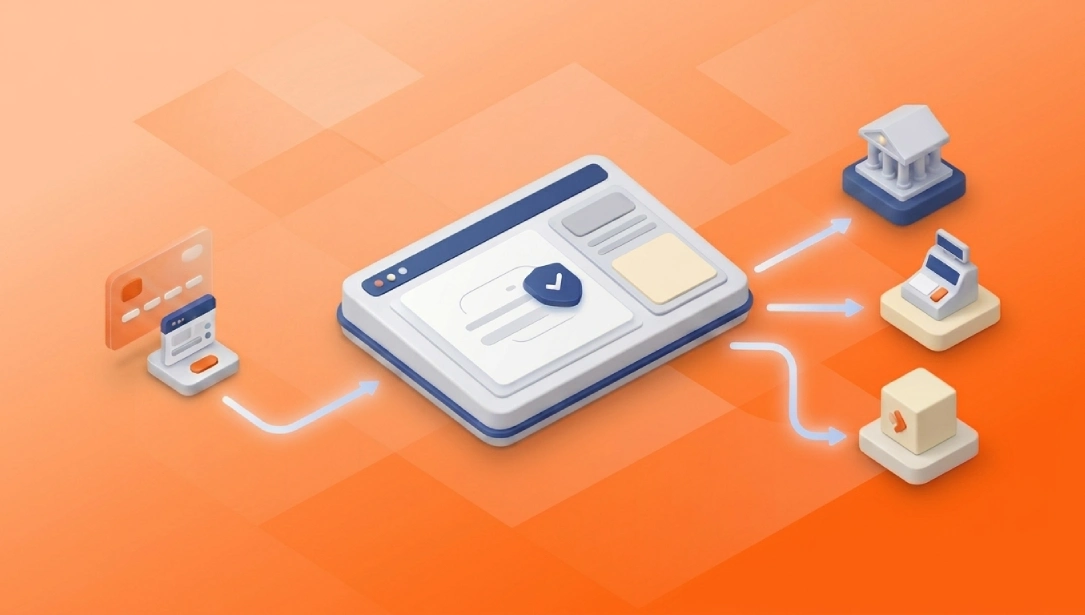
A payment gateway is a technological payment layer that receives a customer’s card payment request from the checkout screen, processes it securely, forwards it to the relevant bank, virtual POS or payment provider, and sends the transaction result back to the business. From the user’s perspective, this process is completed within a few seconds. In the background, however, card data, security checks, 3D Secure flow, bank response, transaction status and payment result work together as part of the same process.
The core function of a payment gateway is not only to transmit a payment request. Its main role is to make the payment flow secure, traceable and manageable. A transaction may be successful, declined, pending or returned with an error. The payment gateway sends this result to the customer, the business panel and, when necessary, connected systems.
It would be incomplete to define a payment gateway merely as a “payment acceptance tool.” The moment of payment is only the beginning of the operation. As a business grows, installment configuration, transaction status, POS selection, failed payment reasons, void-refund processes and the transfer of payment data to connected systems become increasingly critical.
For this reason, a payment gateway becomes a more strategic payment infrastructure layer for businesses that need multi-POS management, installment configuration, transaction tracking, smart routing, BIN lookup, card recognition and operational visibility. Especially in growing digital sales operations, a payment gateway does not only enable payment acceptance; it helps businesses manage the payment process with greater control.
What Does a Payment Gateway Do?
A payment gateway creates a secure and manageable connection between the customer and the payment infrastructure. The customer enters card details on the checkout screen; the payment gateway processes the request, forwards it to the relevant bank or payment provider, and returns the result to the business.
However, the real value of a payment gateway is not limited to transmitting the transaction. Its main value lies in centralizing the payment operation. Especially for businesses working with multiple banks or payment providers, this layer helps the payment flow become more visible and more controlled.
A properly configured payment gateway can support businesses in securely transmitting card payment requests, managing different POS structures from a single point, monitoring transaction statuses, applying installment and card-based rules, tracking void and refund processes more centrally, and reducing technical integration workload.
In this sense, a payment gateway is not only an infrastructure used by e-commerce teams. It also affects finance, operations, customer service and technology teams. It shapes the payment experience on the sales side. It provides transaction and POS visibility for finance teams. It helps operations teams monitor refunds, errors and transaction flows. For technology teams, it directly affects the sustainability of the integration.
It is important to be realistic: a payment gateway does not solve every payment-related issue on its own. Card limit, bank response, 3D Secure flow, fraud checks, internet connection, checkout speed and user behavior can also affect the transaction result. Therefore, a payment gateway should not be evaluated as a “payment success guarantee,” but as an infrastructure layer that makes payment operations more visible, controlled and manageable.
What Is the Difference Between a Virtual POS, a Payment Gateway and Payment Orchestration?
Virtual POS, payment gateway and payment orchestration refer to different levels of the same payment process. These concepts are not completely disconnected from each other, but they are not the same thing.
A virtual POS is a card payment acceptance infrastructure that enables businesses to accept credit card and debit card payments through websites, mobile applications or digital sales channels. It can be provided by banks or authorized payment institutions. For businesses that only need to accept card payments through digital channels at the initial stage, a basic virtual POS structure may be sufficient.
A payment gateway, on the other hand, is a broader technological layer that securely processes the card payment request, forwards it to the relevant virtual POS or payment provider, and returns the transaction result to the business. Advanced payment gateway structures may also include hosted payment pages, API/widget integration, multi-POS management, BIN lookup, smart routing and transaction tracking.
Multi-POS management should not be treated as a completely separate category from the payment gateway. A more accurate framing is this: multi-POS management is a central POS control capability that can exist within advanced payment gateway infrastructures. If a business works with multiple banks or payment providers, managing different POS structures from a single point can make payment operations more traceable.
Payment orchestration refers to a broader provider coordination approach. It involves coordinating multiple payment providers based on cost, redundancy, performance, routing and alternative payment flow logic. However, not every payment gateway is automatically a full-scale orchestration platform. The actual scope should be evaluated separately for each provider.
The practical distinction is this: a virtual POS enables card payment acceptance. A payment gateway makes the payment flow manageable. Multi-POS management helps centralize the control of different POS structures within an advanced payment gateway. Payment orchestration responds to a broader coordination and optimization need in multi-provider environments.
Where Does Multi-POS Management Fit Within a Payment Gateway?
Multi-POS management is the capability to monitor, manage and route different POS structures belonging to different banks or payment providers from a single point based on defined rules. In advanced payment gateway infrastructures, this structure functions as a central POS management layer that makes the payment flow more controlled, flexible and traceable.
In a single-POS setup, payments usually go through one bank or one payment provider. This may be sufficient at the beginning. However, when a business starts working with multiple banks, payment institutions or virtual POS structures, payment management becomes more complex. Each POS may have different commission conditions, installment structures, bank responses, reporting formats and transaction statuses.
Multi-POS management helps reduce this complexity from a single point. A transaction can be routed to the appropriate POS based on the issuing bank of the card, card type, transaction amount, number of installments, POS conditions, campaign setup or predefined business rules. As a result, the business does not merely accept payments; it can also track which transaction was processed through which POS, why it was routed there and how the transaction result was returned.
This distinction is especially important for online payment gateway infrastructures such as Finrota B2C. In the context of Finrota B2C, multi-POS management should not be evaluated as a separate solution disconnected from the payment gateway. It should be considered a central payment flow capability that works together with the hosted payment page, BIN lookup, API/widget integration and smart routing.
How Does a Payment Gateway Work?
The operating logic of a payment gateway is based on receiving the payment request securely, applying the necessary controls and forwarding it to the correct payment channel. From the user’s perspective, the process appears short. In the background, however, the checkout screen, card data, security control, POS routing, bank response and transaction result work together.
In the first step, the customer reaches the payment page on an e-commerce website or digital sales channel. This screen may be a hosted payment page, a widget/modal structure or a custom checkout experience developed through API integration. At this stage, the important point is to provide the user with a secure and understandable payment flow.
In the second step, the customer enters credit card or debit card details. At this point, secure processing of card data, trust in the payment screen, mobile compatibility and clear error messages directly affect the payment experience.
In the third step, the system begins to recognize the card information. BIN lookup may come into play at this stage. Based on the first digits of the card number, the system can identify the card’s issuing bank, card type and certain payment attributes. This structure helps display the correct installment options, apply card-based rules and make the payment flow more controlled.
In the fourth step, the payment request is routed to the relevant POS or payment provider. In a single-POS setup, the transaction usually follows one fixed channel. In a multi-POS-enabled payment gateway structure, the transaction can be forwarded to different bank or payment provider POS structures based on predefined rules.
In the final step, the bank or payment provider returns the transaction result. The transaction may be successful, declined, pending or returned with an error. The payment gateway sends this result to the checkout screen, the business panel and, where necessary, connected systems. Finance, operations or customer service teams can also track this transaction status.
What Is Smart POS Routing?
Smart POS routing is a payment gateway capability that routes a card payment request to the appropriate POS infrastructure based on predefined rules. The objective is not merely to send the transaction to a different POS. It is to manage the payment flow in a more controlled way based on card type, issuing bank, transaction amount, installment option, POS conditions and technical response status.
In a single-POS setup, the payment request usually follows a fixed channel. In multi-POS-enabled structures, the payment gateway can route the transaction to different bank or payment provider POS structures according to the rules defined by the business. For example, if a specific bank card offers more favorable installment conditions, the transaction can be routed to the relevant POS. In another scenario, if a certain POS does not respond, an alternative POS flow can be activated.
Smart routing rules are shaped according to the business’s commercial and technical priorities. The issuing bank of the card, card type, transaction amount, number of installments, POS commission conditions, campaign agreements, provider response status or the possibility of a technical outage can all influence routing decisions.
BIN lookup is one of the supporting components of this flow. Without accurately recognizing the issuing bank or card type, it may not be possible to determine which installment option should be displayed or which POS the transaction should be routed to. For this reason, even if BIN lookup is not treated as a separate topic, it remains an important part of the payment gateway, multi-POS management and smart routing logic.
The limitation should be clearly stated: smart POS routing does not solve every failed payment issue on its own. Card limit, bank response, 3D Secure flow, fraud checks, checkout speed, internet connection and user behavior also affect the payment result. Therefore, smart routing should not be positioned as a “success guarantee,” but as an operational capability that makes the payment flow more controlled and traceable in multi-POS structures.
Which Businesses Need a Payment Gateway?
The need for a payment gateway is not determined only by whether a business accepts card payments. The real determining factors are payment volume, number of POS structures, installment setup, transaction tracking, integration requirements and the complexity of post-payment operations.
For a small business working with a single bank or a single virtual POS, a basic payment acceptance structure may be sufficient. However, as the business grows, the payment operation moves beyond the question “Was the payment received?” and turns into questions such as: “Which POS was used?”, “Why did the transaction fail?”, “Which installment option was offered?”, “How is the refund being tracked?” and “Which system receives the payment data?”
For this reason, a payment gateway becomes more critical for:
Businesses that regularly accept card payments through e-commerce websites or digital sales channels
Companies working with multiple banks or payment providers
Teams managing installment, card type, campaign or bank-based payment rules
Businesses that track payment transactions together with finance, operations and customer service teams
Companies that want to manage the checkout experience more effectively
Technical teams that want to connect payment infrastructure to digital channels through API, widget or hosted payment page options
Businesses that need foreign currency payment or multi-currency payment acceptance
If the payment operation is limited to a single POS and low transaction volume, a basic virtual POS may be enough. However, when the number of POS structures, installment rules, transaction tracking, void-refund management, checkout control and integration needs increase, a payment gateway becomes not only a technical choice but also an operational control decision.
How Should Hosted Payment Page, Widget and API Integration Be Evaluated?
The right payment gateway integration model should be determined according to the business’s technical capacity, go-live targets and expectations for control over the checkout experience. A hosted payment page provides a fast start. A widget or modal structure can offer a more embedded experience within the website. API integration provides the highest level of control, but it also requires greater technical responsibility.
A hosted payment page is a practical option for businesses with limited technical resources or those that want to start accepting card payments quickly. In this model, the payment step usually proceeds through a secure page provided by the payment provider. Its main advantage is enabling a fast go-live with low technical effort. However, customization over the brand experience and payment screen may be more limited.
Widget or modal integration can provide a more integrated experience compared to a hosted payment page. The user can enter card details without fully leaving the website experience. This structure may be suitable for businesses seeking a balance between fast integration and a smoother checkout experience.
API integration is more suitable for businesses that want greater control over the payment flow. Custom checkout design, advanced business rules, different payment scenarios and detailed integration requirements can be configured more flexibly through APIs. However, API integration brings more responsibility in terms of development, testing, security control, error handling and maintenance.
For this reason, the integration model should not be evaluated only as a technical preference. It should also be assessed in terms of customer experience, security, go-live time and operational sustainability.
Where Does Finrota B2C Fit in This Structure?
Finrota B2C is an online payment gateway infrastructure developed for businesses that want to accept credit card and debit card payments from individual customers through websites or digital sales channels. With capabilities such as hosted payment page, API/widget integration, multi-POS management, smart/dynamic routing, BIN lookup and foreign currency payment infrastructure, it helps businesses manage card payment flows from a single point.
Positioning Finrota B2C merely as a “virtual POS alternative” would narrow the product’s scope. A more accurate positioning is this: Finrota B2C is an infrastructure that manages B2C card payment requests coming from digital sales channels under an online payment gateway structure, while offering capabilities such as multi-POS management and smart routing within this structure.
Therefore, in the context of Finrota B2C, multi-POS management should not be described as a solution that is separate from the payment gateway. It should be positioned as a central POS control capability within the payment gateway infrastructure.
Finrota B2C can be evaluated especially by businesses that accept payments from end customers through e-commerce websites, accept card payments through digital sales channels, work with multiple bank or POS structures, manage installment and card-based payment setups, want to go live quickly with a hosted payment page, or want to connect payment infrastructure to their digital channel through API/widget integration.
What Is the Difference Between Finrota B2C and Netahsilat?
Finrota B2C is an online payment gateway infrastructure developed for businesses that want to accept card payments from end customers through websites or digital sales channels. Netahsilat, on the other hand, is a broader online collection platform that manages dealer, sub-dealer, customer, subscriber or user-based collection processes.
The short distinction is this: Finrota B2C focuses on B2C payment flows in digital sales channels, while Netahsilat focuses on corporate collections, dealer collections and current account-linked collection processes. Therefore, these two solutions should not be treated as products that address the exact same need, but as Finrota solutions designed for different payment and collection scenarios.
This distinction is important for accurate product positioning. Finrota B2C focuses on managing card payment flows in digital sales channels through a payment gateway approach. Netahsilat is positioned more around corporate collection, dealer networks, sub-dealer structures, customer-based collections and current account-linked processes.
Feature / Criterion | Finrota B2C | Netahsilat |
Main Focus | Digital sales channels and e-commerce | Dealer network, sub-dealers and corporate collections |
Target Audience | End customers / consumers (B2C) | Dealers, subscribers and business partners (B2B) |
Integration Structure | E-commerce cart and checkout flow | Current account, ERP and accounting systems |
Key Capability | Multi-POS management and smart routing | Dealer limits, receivables tracking and bulk reconciliation |
Frequently Asked Questions
What is a payment gateway?
A payment gateway is a technological payment layer that securely receives card payment requests in e-commerce and digital sales channels, forwards them to the relevant bank or payment infrastructure, and returns the transaction result to the business. In advanced structures, it can help manage the payment flow more centrally through capabilities such as multi-POS management, BIN lookup and smart routing.
What is the difference between a virtual POS and a payment gateway?
A virtual POS is the card payment acceptance infrastructure provided by a bank or payment institution. A payment gateway is a broader technological layer that securely transmits the payment request, returns the transaction result to the business and, in advanced structures, can offer capabilities such as multi-POS management.
What is multi-POS management?
Multi-POS management is the approach of monitoring and managing POS structures belonging to different banks or payment providers from a single point. In advanced payment gateway infrastructures, it is a central POS management capability that helps the payment flow proceed in a more controlled and traceable way.
What does smart POS routing do?
Smart POS routing helps route a payment request to the appropriate POS based on predefined rules. These rules can be shaped by the issuing bank, card type, transaction amount, number of installments, POS conditions or provider response status.
What does BIN lookup do?
BIN lookup helps identify the issuing bank, card type and certain payment attributes based on the first digits of the card number. It is used to display the correct installment options, apply card-based rules and support POS routing decisions.
Is a hosted payment page or API integration more suitable?
If technical resources are limited and the goal is to start accepting payments quickly, a hosted payment page may be more suitable. If a branded checkout experience, advanced control and a more flexible payment flow are needed, API integration becomes a more appropriate option.
Is Finrota B2C a virtual POS?
Finrota B2C should not be positioned only as a virtual POS. It is an online payment gateway infrastructure developed for businesses that want to accept card payments through websites or digital sales channels. It offers capabilities such as multi-POS management, smart/dynamic routing, BIN lookup and hosted payment page within the payment gateway structure.
What is the difference between Finrota B2C and Netahsilat?
Finrota B2C is an online payment gateway infrastructure developed for businesses that want to accept credit card or debit card payments from end customers through digital sales channels. Netahsilat is an online collection platform that manages dealer, sub-dealer, customer, subscriber or user-based collection processes.
Conclusion: A Payment Gateway Is a Control Layer for Growing Digital Sales Operations
A payment gateway is not just a technical connection used to accept card payments. For growing businesses, it is an infrastructure layer that helps make payment flows, POS routing, installment options, transaction statuses and checkout experience more manageable.
A virtual POS enables payment acceptance. A payment gateway makes the payment flow more centralized and traceable. Multi-POS management helps control different POS structures from a single point within an advanced payment gateway. Payment orchestration responds to broader coordination and optimization needs in multi-provider environments.
For this reason, businesses should not only ask, “Which virtual POS should we use?” A more accurate question is: “How can we make our B2C payment operation more visible, flexible and controlled?”
Finrota B2C is an online payment gateway solution that can be evaluated by businesses with needs such as hosted payment page, API/widget integration, multi-POS management, smart/dynamic routing, BIN lookup and foreign currency payment infrastructure. If you want to manage your B2C payment flow more centrally, you can explore Finrota B2C or request a demo for a structure tailored to your needs.