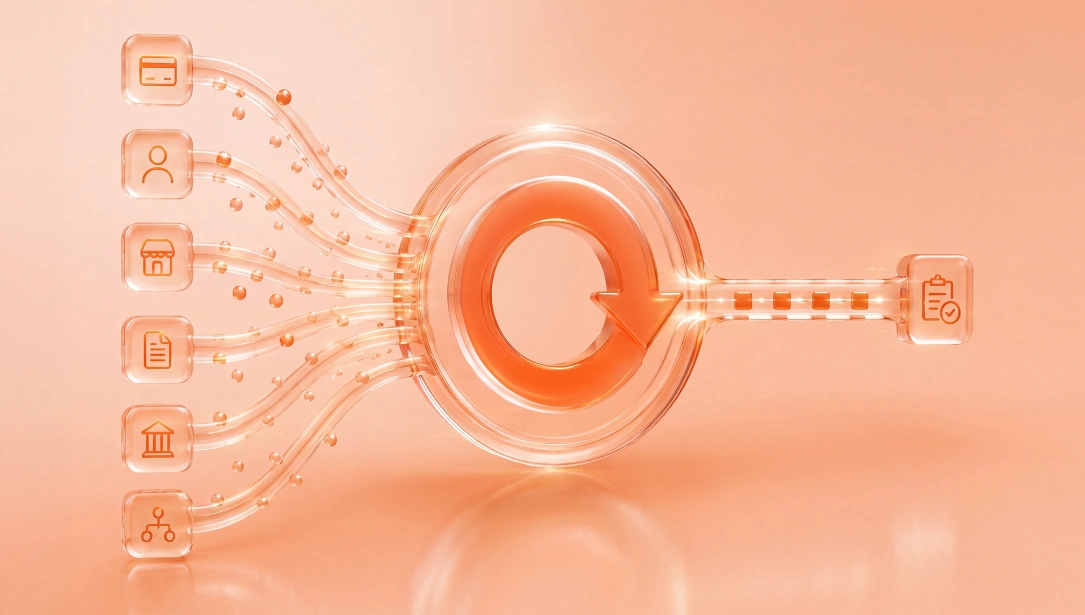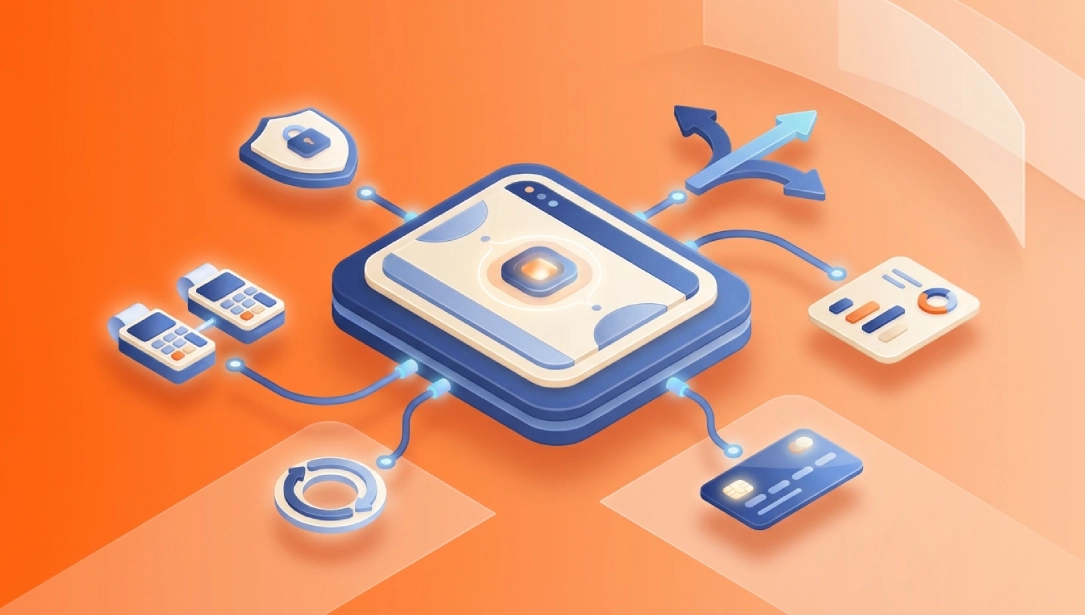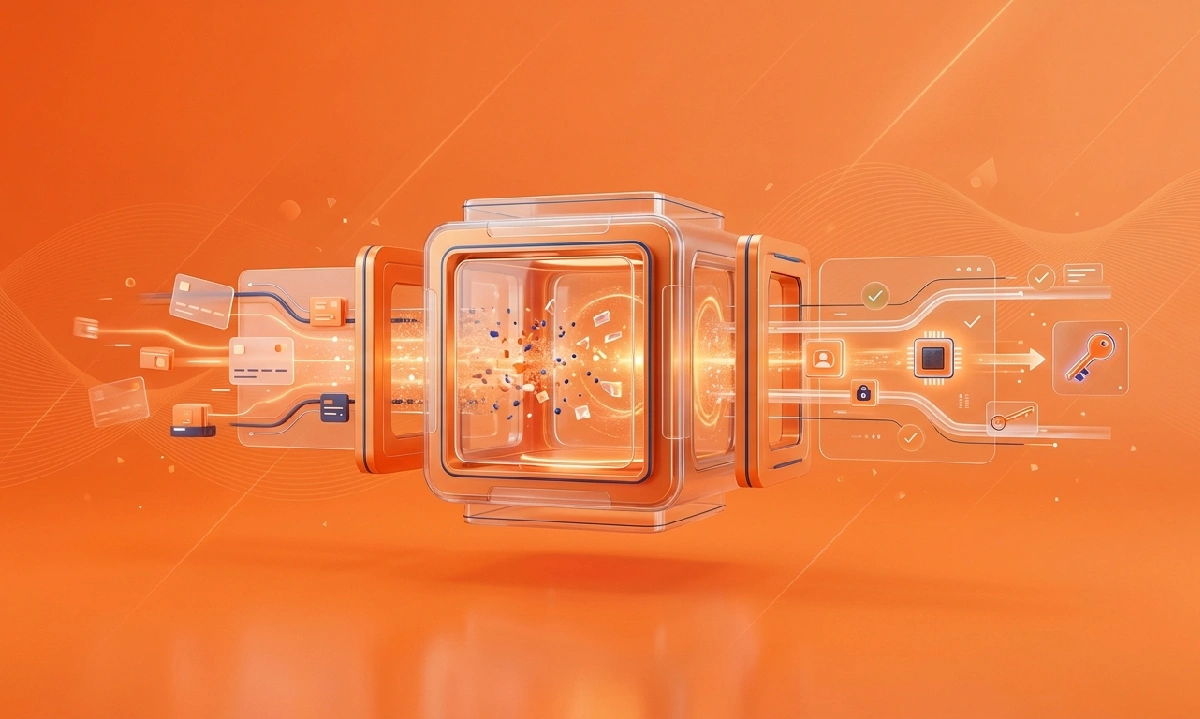
Finrota Vault is a state-of-the-art security technology that, instead of storing sensitive card data within B2B payment systems, instantly destroys this data and replaces it with randomly generated digital identifiers (tokens). Operating on the principle that “you can’t steal data you don’t have,” this system mathematically reduces the risk of data breaches to zero.
What Is Vault Technology and the “Zero-Knowledge” Principle?
In traditional payment methods, security focused on protecting data with complex encryption. However, in the face of modern cyber threats, simply “locking” data is no longer sufficient as a defense mechanism. Finrota fundamentally redefines security by adopting the Zero-Knowledge (Blind Spot) approach.
The Zero-Knowledge principle in the Finrota Vault system is built on three main pillars:
Absolute Isolation: Card data enters a “Vault” (Safe) that is fully isolated from the outside world and protected both physically and logically, in accordance with PCI-DSS Level 1 standards.
Zero Visibility: From the moment card information enters the system, no Finrota employee, manager, or software layer can view the number in plain text.
Data Destruction: The moment data enters the vault, the original card number is completely expelled from the system and destroyed. The only thing remaining in Finrota systems are tokens—the “ghosts” of that data.
The Key Differences Between Tokenization and Encryption
Decision-makers seeking to optimize security in the B2B payments landscape must clearly understand the difference between tokenization and encryption. While encryption is a method of concealment, tokenization is a method of substitution.
Step-by-Step Technical Workflow: A Card’s Secure Journey
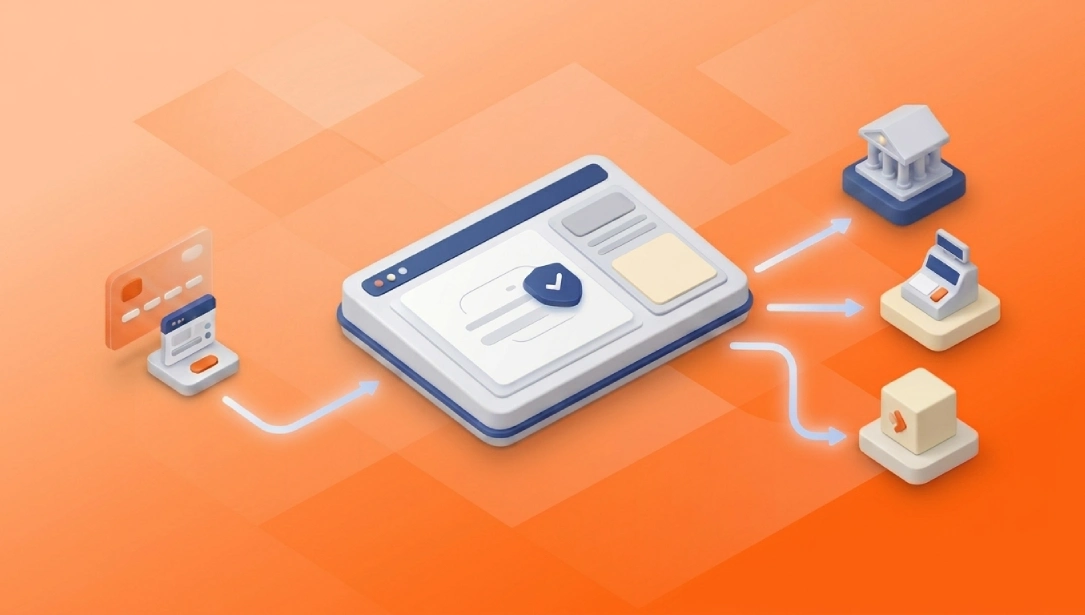
The Finrota Vault architecture is designed around a workflow in which data never touches the B2B company’s servers. This process unfolds in the following steps:
Input: The customer enters their card details on the payment screen.
Redirection: The data flows directly to Finrota Vault without ever touching the B2B company’s servers.
Transformation: Vault destroys the card number within seconds and generates a unique, transaction-specific Token (Key/Token).
Transaction: Only this token is used in subsequent refund, cancellation, or recurring payment processes.
Bank Communication: The bank receives only the instruction “Process the transaction for the card represented by this token”; the actual card number is never disclosed.
Seamless User Experience with Finrota Vault (Card on File)
Finrota Vault technology not only provides top-tier security but also streamlines your business processes. Without compromising on security, you can offer your merchants and customers the ability to securely save their cards for future purchases. Thanks to this innovative approach, you significantly reduce cart abandonment rates (churn) for repeat orders and increase your direct payment processing speed.
PCI-DSS and Liability Transfer Benefits for B2B Companies
Using Finrota Vault offers B2B company executives and CFOs not only a technical security layer but also an operational cost advantage.
Liability Transfer: Since your company does not handle card data, you are exempt from the heavy and costly audit obligations of PCI-DSS.
Reputation Protection: By committing to your resellers and customers that “we do not store card data,” you elevate brand trust to the highest level.
Mathematical Security: Since there is no database to be breached, the risk of a data breach is eliminated both theoretically and practically.
Note: You can explore Finrota Vault technology right away to optimize security in your B2B payment systems and reduce your operational workload. Contact our professional teams for detailed information and demo requests.
Frequently Asked Questions
1. Is card data stored in our system when using Finrota Vault?
No. Card data is transmitted directly to Finrota Vault without ever passing through your servers, where it is destroyed.
2. Can Finrota staff view the card numbers of those making payments?
No. In accordance with the “Zero-Knowledge” principle, no staff member, administrator, or software layer can view the card number in plain text.
3. Why is tokenization more secure than encryption?
Encryption involves a key, and that key can be compromised. In tokenization, however, the data is completely destroyed and replaced with a representative that has no financial value.
4. What is the PCI-DSS certification of the Finrota Vault system?
Finrota Vault is a physically and logically isolated environment certified to PCI-DSS Level 1, the highest security standard.
5. If a data breach occurs, can the tokens be stolen?
Even if attackers obtain the tokens, these tokens do not work in any bank or system outside of Finrota; therefore, what is obtained is merely a meaningless string of data.
6. How does the process work for recurring payments?
The secure token generated during the first transaction is used for all subsequent recurring payments without the need for the actual card number.
7. Does this system provide a cost advantage for B2B companies?
Yes. Since the responsibility for storing card data is transferred to Finrota, companies are relieved of the heavy costs associated with PCI-DSS compliance audits.